
Physical MarketingVehicle & Fleet Graphics
Fleet Graphics Are Advertising's Cheapest Impression. On Paper.
Wrapped vans really are among the cheapest ways to reach people. The catch is the impression math behind that famous sub-dollar CPM.

Key takeaways
- Fleet graphics have among the lowest cost-per-impression in advertising. Vendors often quote under $1 CPM, against roughly $43 for broadcast TV.
- That headline CPM leans on inflated impression counts. The famous 30,000 to 70,000 views per vehicle per day traces to an old estimate, not a study.
- A realistic metro service van earns closer to 8,000 to 20,000 impressions a day. A mostly-parked vehicle earns far fewer.
- Recalculate with honest impressions and fleet graphics still win on cost, just not by the margins the pitch promises.
- Price a wrap on its multi-year, amortized cost and local repetition, not one inflated daily number.
The number that sounds too good to be true
A wrapped delivery van can put your brand in front of a thousand people for well under a dollar. On a spreadsheet, that beats almost anything else in advertising.
Cost-per-thousand, or CPM, is how media buyers compare very different channels on one axis. It answers a blunt question. What does reaching a thousand people cost here?
By that measure, fleet graphics look untouchable. Vendors routinely quote CPMs under a dollar. Broadcast television sits closer to forty.
The gap is real. The number underneath it is shakier than the industry likes to admit.
This piece does two things. It shows you where fleet graphics genuinely win on cost. Then it shows you how to price a wrap without fooling yourself.
How the other media actually price out
Start with the honest part. Out-of-home advertising, the category that covers wraps, billboards, and transit, is genuinely cheap per impression.
Average CPM for out-of-home advertising, against roughly $43 for broadcast TV
OAAA / Solomon Partners, 2025
A 2025 major-media comparison run for the industry body placed out-of-home below television, print, and most digital formats on cost per thousand. Only radio and some social formats tend to undercut it.
* often quoted under $1, but rests on contested impression counts
Money is following that math. U.S. out-of-home revenue reached a record $9.46 billion in 2025, its nineteenth straight quarter of growth.
There is a quality argument on top of the price. A thousand billboard impressions means roughly a thousand real people. A thousand digital impressions can include bots and ads no one ever saw.
Fleet graphics push that logic further. Nobody scrolls past a van. Nobody installs a blocker for it. The ad rides at eye level, in traffic, alongside the exact people a local business wants.
Where the impression math breaks
Here is where the sub-dollar CPM comes from. You divide a modest wrap cost by an enormous impression count.
The impression count is the problem. The figure you will see everywhere is thirty to seventy thousand views per vehicle, per day.
One honest vendor guide traced the number back and found no study behind it. The figure is a ceiling for a high-mileage vehicle on a dense urban route. It is not an average.
Real numbers depend on how the vehicle is driven.
| How the vehicle is used | Realistic impressions / day |
|---|---|
| Parked at job sites most of the day | 1,000–5,000 |
| Metro service van (80–150 mi/day) | 8,000–20,000 |
| High-mileage delivery (150–300 mi/day) | 20,000–40,000 |
The arithmetic is unforgiving. If your impression estimate is five times too high, your reported CPM is five times too low.
That is exactly how the sub-dollar figures happen. They quietly assume the ceiling, every day, for every vehicle.
A worked example: one van versus one billboard
Numbers beat adjectives. So take a small home-services company weighing two options for the same year.
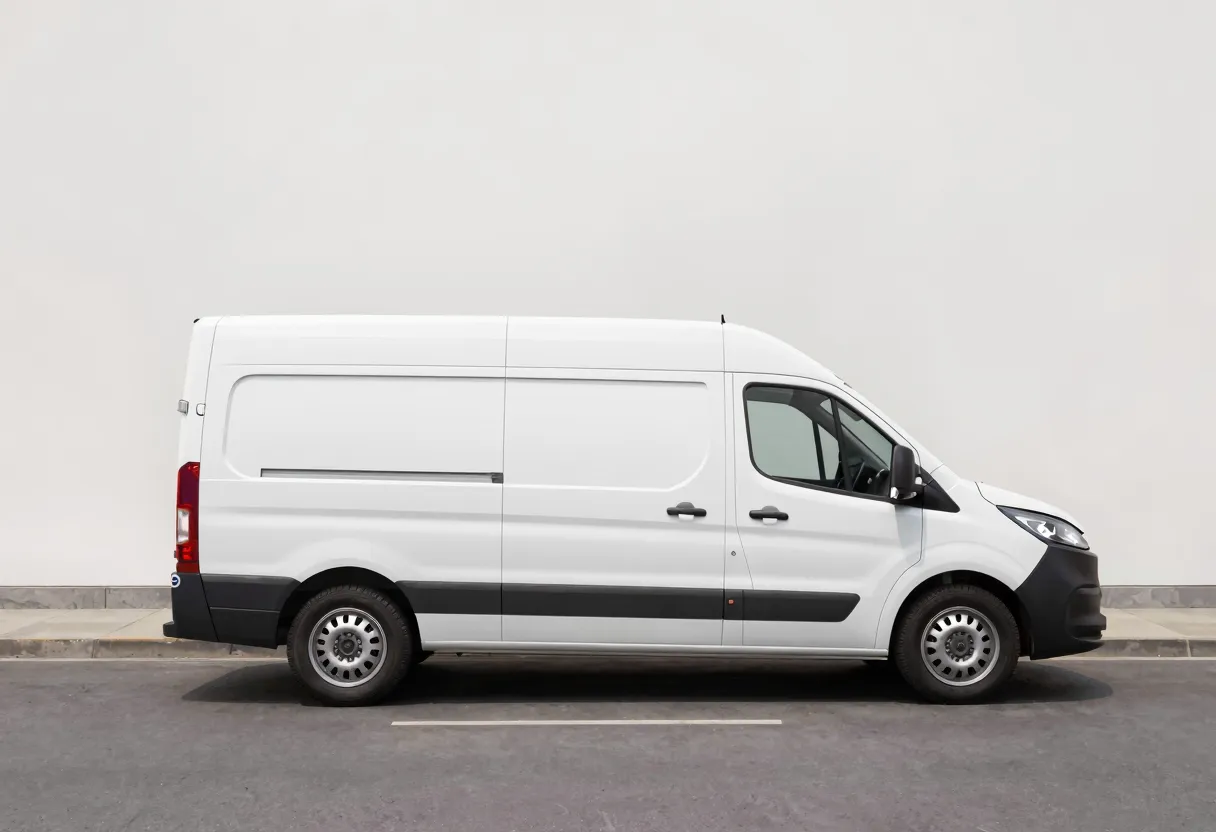
Option one is a full wrap on a single service van. Say it costs $3,500 and lasts four years. That is $875 a year.
The van runs a metro route five days a week. Use a conservative 12,000 impressions a day across about 260 working days. That comes to roughly 3.1 million impressions a year.
The CPM lands near $0.28. Halve the impressions to be cautious and you are still comfortably under a dollar.
Option two is a single billboard in the same city. A standard bulletin might rent for around $2,500 a month, or $30,000 a year.
At a typical bulletin rate, that billboard earns roughly 5 million impressions a year, for a CPM near $6.
So the van wins on cost per impression by a wide margin, even on cautious numbers. That is the genuine case for fleet graphics.
But look at what the billboard buys that the van does not. A guaranteed location. Audited traffic counts. A fixed audience you can point to on a map.
The van's audience is real but fuzzy. You are trading certainty for cost. Whether that is a good trade depends on how much certainty your marketing actually needs.
What actually drives the cost of a wrap
Before you can price impressions, you need an honest wrap cost. It varies more than people expect.
Coverage is the biggest lever. A full wrap that skins the whole vehicle costs far more than partial graphics on the doors and rear.
Vehicle size comes next. A compact car is a smaller canvas than a box truck, and the box truck's flat panels are cheaper to cover per square foot.
Then there is design and installation. A clean design on a simple shape installs fast. Curves, rivets, and busy artwork add labor and material.
As a rough guide, partial graphics on a small vehicle can start in the low hundreds. A full wrap on a large van or truck runs several thousand dollars, installed.
Use the figure you will actually pay, not the cheapest quote you can find. A wrap that fails in two years quietly doubles your real CPM.
Do the honest math on your own fleet
You do not need the industry's number. You need yours.
Take the cost of the wrap. Spread it across the years it will last. A good cast-vinyl wrap holds up for four to five. Then multiply realistic daily impressions by the days your vehicles actually drive.
Plug in numbers you can defend. A single wrapped van still lands at a CPM most media buyers would envy, without pretending it reaches a stadium every day.
Can you even measure it?
Cost per impression is only half the question. The other half is whether those impressions do anything.
This is where fleet graphics are genuinely weak. A wrap builds familiarity, not clicks. You cannot watch a sale travel from a van to a checkout.
You can get closer than most businesses bother to, though.
- Put a dedicated phone number or a vanity URL on the wrap, and track what comes through it.
- Ask new customers how they first heard of you, and actually log the answers.
- Run a geographic lift test: wrap the vehicles working one service area, leave another bare, and compare inquiries over a few months.
- Watch branded search and direct traffic in the neighborhoods your vans cover most.
None of this is as clean as a click. But it moves fleet graphics from an act of faith to a defensible line in the budget.
The mistakes that quietly waste the money
A cheap CPM cannot save a bad wrap. Most of the waste comes from a short list of avoidable mistakes.
The first is clutter. Owners try to fit every service, every phone number, and a paragraph of copy onto one door. At forty miles an hour, none of it reads.
A wrap gets about three seconds. It should carry one idea, one brand, and one clear way to respond.
The second mistake is wrapping the wrong vehicles. The van that sits in a depot all day earns a fraction of the impressions of the one on the road. Wrap the movers first.
The third is neglect. A faded, peeling wrap on a dirty vehicle sends the opposite of the message you paid for. The vehicle is the brand now, so keep it clean.
Fix those three and the honest CPM you calculated actually shows up on the street.
What fleet graphics are actually good at
Strip away the inflated claims and the case is still strong.
Fleet graphics are a one-time cost against years of exposure. Television, search, and social bill you every month. A wrap keeps working in traffic and in a parking lot, whether or not you spent anything that day.
They are local by nature. Your vans saturate the exact neighborhoods you serve. That repetition is what turns a name into a default choice.
What they cannot do is target one person or prove one sale. Judge fleet graphics as a brand medium rather than a response one, and they hold up well.
For a service business that already sends vehicles across town every day, turning them into billboards is close to the cheapest reach money can buy.
AdQuick
Plan, buy, and measure out-of-home campaigns, including transit and vehicle media, in one place.
Explore AdQuickAffiliate disclosure: CMO Mag may earn a commission if you sign up through this link. It never affects our editorial assessment. How we handle affiliates.
See how physical channels earn their place in a modern marketing mix.
Frequently asked questions
Even on conservative impression estimates, fleet graphics usually land in the low single digits per thousand, cheaper than billboards and radio, and far below television. Treat any quoted CPM under a dollar with suspicion; it almost always rests on inflated impression counts.
It depends on mileage. A vehicle parked at job sites might reach 1,000 to 5,000 people a day; a metro service van doing 80 to 150 miles reaches roughly 8,000 to 20,000; a high-mileage delivery vehicle can hit 20,000 to 40,000. The oft-quoted 30,000 to 70,000 is a ceiling, not an average.
Per impression, usually yes, because the wrap is a one-time cost spread over several years while billboard space is rented monthly. But billboards can guarantee a fixed location and audited traffic counts, which wraps cannot.
Use a dedicated phone number or vanity URL on the wrap, ask new customers how they heard of you, run a geographic lift test between wrapped and unwrapped areas, and watch branded search and direct traffic where your vehicles operate.
A quality cast-vinyl wrap lasts four to five years with normal use. That lifespan is central to the CPM case, because amortized over years the per-impression cost stays low.
Advertiser disclosure: some links in our articles are affiliate links, and CMO Mag may earn a commission or referral fee if you sign up or buy through them, at no cost to you. It never affects our editorial coverage. See our advertising & affiliate policy.
Discussion
No comments yet. Be the first to say something worth reading.