
Out-of-Home Advertising Formats and Costs: A 2026 Buyer's Guide
Billboards, transit wraps, digital spectaculars, and place-based screens all get lumped under one label. Here's what each actually costs, how impressions get counted, and who to call.

Key takeaways
- US out-of-home ad revenue hit $8.9 billion in 2023 per OAAA and Standard Media Index, and digital displays now make up a growing share of that spend.
- Static billboard costs typically run from $250 to $4,000 a month depending on market and format; digital spectaculars in top markets can run into seven figures a year.
- Impressions in OOH come from traffic-based circulation data (Geopath in the US), not click logs, so the methodology matters more than the raw number.
- Lamar, OUTFRONT Media, Clear Channel Outdoor, Pattison Outdoor, and Astral control most measured inventory in North America, alongside regional players worth a direct call.
- Before any buy, ask for the Geopath ID and circulation basis on every panel, not just a media kit CPM.
The Number That Should Change How You See a Billboard
US advertisers spent $8.9 billion on out-of-home media in 2023, up 4.4 percent over the prior year, according to the Out of Home Advertising Association of America and Standard Media Index. That's the highest total the channel has posted, and 2024 and 2025 both extended the streak. The number matters less than what's driving it: OOH is the rare channel where a buyer can stand under the media and count the cars.
I've sat in enough Winnipeg conference rooms to know the first objection: OOH feels analog next to a programmatic dashboard. But when Portage and Main reopened to foot traffic in 2025 after four decades behind barricades, three brands had wraps up on the surrounding towers within weeks. That's the pitch in miniature. Physical space gets scarce, attention gets concentrated, and the format map is bigger than a highway bulletin.
This guide breaks down the formats a first-time OOH buyer will actually encounter, what they cost in 2026, how the industry counts impressions, and which companies hold the inventory. Bookmark it before your next media plan.
The Full Format Map: Billboards to Place-Based Screens
Out-of-home splits into four broad families, and most confusion in a first buy comes from treating them as one thing.
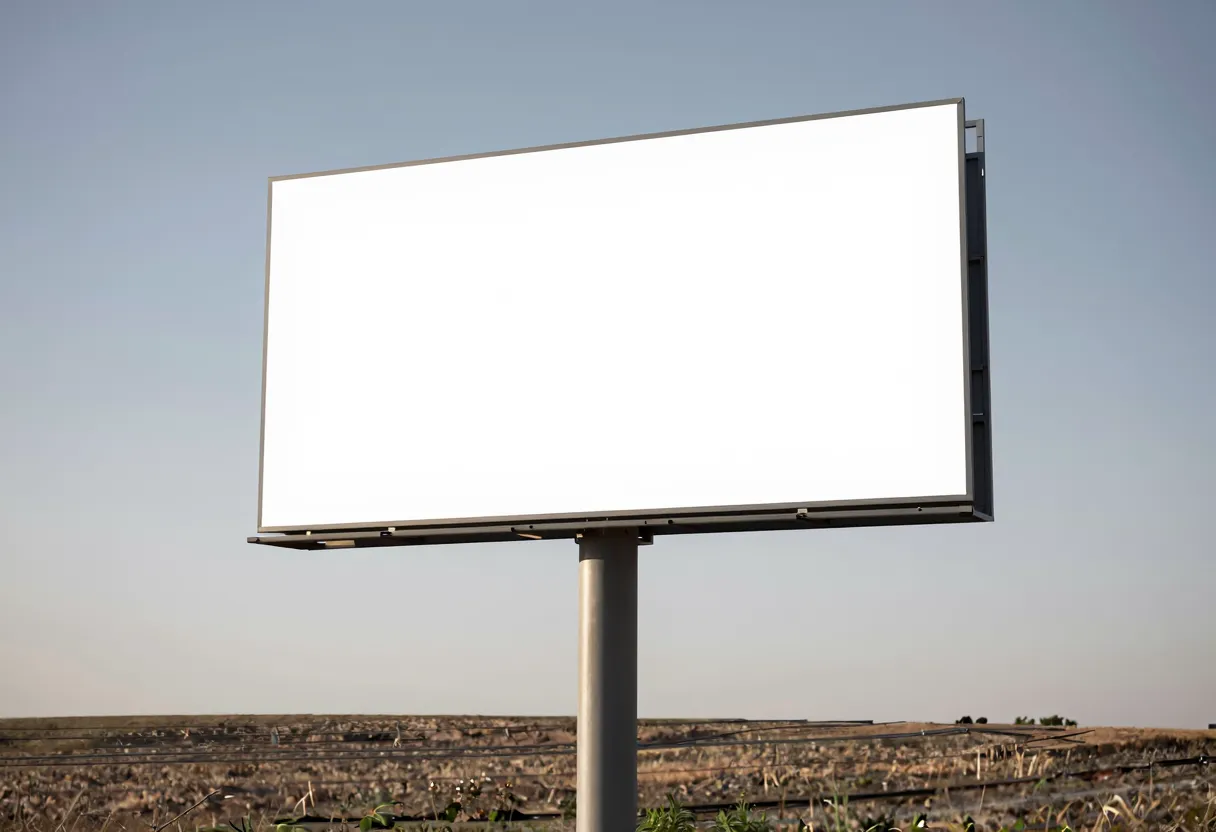
- Roadside billboards: static bulletins (large, high-impact, usually 14 by 48 feet) and posters (smaller, denser, used for local coverage).
- Transit: bus wraps, bus shelters, subway and train car cards, airport terminal displays, and rideshare toppers.
- Digital out-of-home (DOOH): programmatic digital billboards, digital transit shelters, and place-based screens sold like a media exchange, buyable by daypart or audience segment.
- Place-based: screens and static units in gyms, malls, elevators, gas station pumps, medical offices, and stadium concourses, sold by the venue or a network operator.
- Fleet and vehicle graphics, covered in depth in our breakdown of fleet graphics cost per impression, sit adjacent to OOH and often get folded into the same budget line.
What It Costs: A Buyer's Range by Format
Rate cards vary enormously by market size, traffic volume, and illumination, but the ranges below reflect what media buyers typically see quoted in 2026 across mid-size and top-tier North American markets.
| Format | Typical monthly cost | Unit | Notes |
|---|---|---|---|
| Static bulletin, mid-size market | $1,500 to $4,000 | per panel | 4-week rotation, high-traffic arterial |
| Static poster | $250 to $1,200 | per panel | Local coverage, dense placement |
| Digital billboard rotation | $1,000 to $5,000 | per 8-10 second spot slot, shared panel | Priced by daypart, market, and share of loop |
| Bus shelter, static | $300 to $900 | per shelter | Often sold in packages of 20 to 50 |
| Full bus wrap | $3,000 to $9,000 | per bus, per month | Highest visibility per-unit transit format |
| Place-based screen network | $500 to $3,000 | per venue category buy | Gyms, medical offices, elevators |
| Times Square-class digital spectacular | $1M+ | per year | Reported rates for premium NYC placements |
Regional variance is the whole game. A Kenaston Boulevard bulletin in Winnipeg costs a fraction of a comparable panel on the Gardiner Expressway in Toronto or Sunset Boulevard in Los Angeles, and DOOH pricing shifts with programmatic demand the same way search auctions do. Ask for last quarter's actual sell-through rate, not just the rate card, before you anchor a budget to it.
How OOH Impressions Get Counted
In the US, most measured OOH inventory runs on Geopath's circulation model: anonymized traffic and mobile location data get combined with a panel's size, angle, illumination, and speed of passing traffic to produce an audience estimate per display, refreshed on a rolling basis across more than 400,000 measured units.
That's different from a click log or a video completion rate. A Geopath number is an estimate of eyes that had the opportunity to see a panel, adjusted for visibility, not a confirmed engagement. Transit ridership feeds into the same logic: the American Public Transportation Association reported roughly 7.9 billion unlinked passenger trips across US transit systems in 2023, and that base volume is what transit media sellers use to justify shelter and bus wrap reach.
It's worth saying plainly: OOH's impression math is more transparent than what digital platforms currently offer. Google has said AI search sends "billions" of clicks weekly without publishing the underlying data, and marketers evaluating that claim against a Geopath circulation report will notice the OOH number comes with a published methodology they can actually audit.
A billboard's impression count is an estimate you can trace back to a traffic sensor. A lot of digital's is a number you're asked to trust.Danielle Cardinal
None of this means OOH slots neatly into the same attribution models you'd use for paid search or social. If you're rebuilding your measurement stack for 2026 budgets, it's worth reading how current attribution models handle offline channels before you promise a CFO a clean multi-touch view of a billboard's contribution.
Who Sells This Inventory
Four companies control most measured OOH inventory in North America. Lamar Advertising is the largest by panel count, strong in mid-size US markets and highway corridors. OUTFRONT Media dominates US transit, particularly the New York and Los Angeles subway and bus systems. Clear Channel Outdoor holds major-market billboard and airport inventory. In Canada, Pattison Outdoor and Astral (part of Bell Media) split most of the billboard, transit, and place-based inventory across major cities, including Winnipeg's own arterial and transit networks.
Below those four sit dozens of regional operators worth a direct call: airport concessionaires, stadium and arena operators (Canada Life Centre in Winnipeg sells its own concourse and ice-level inventory separately from any national network), gym and medical-office screen networks, and gas station pump-topper companies. A media buyer new to OOH often assumes the national players cover everything. They don't. The best local inventory rarely shows up in a national sales deck.
Where OOH Fits Next to Digital Placement
The line between physical and digital placement is blurring from both directions. Apple Maps now sells location-based ads directly inside navigation, though it excludes categories like home services and crypto ATMs from that inventory, a reminder that even map-based placements carry their own policy walls. Meanwhile, DOOH networks are increasingly bought through the same programmatic pipes as digital display, which means the format distinctions in this guide will keep collapsing over the next few years.
For a first OOH buy in 2026, my advice hasn't changed in years: start with one high-traffic corridor or transit route you know personally, verify the circulation data yourself, and run it for a full quarter before scaling. Physical media rewards patience and punishes buyers who treat it like a search campaign you can pause on day three.
Explore more advertising strategy and channel breakdowns from CMO Mag.
Frequently asked questions
Highway billboards (bulletins and posters), transit ads (bus wraps, shelters, subway cards), digital billboards and DOOH screens, and place-based media in gyms, elevators, malls, and medical offices. Fleet graphics and stadium signage are often bought alongside these formats.
Static posters can run $250 to $1,200 a month, bulletins $1,500 to $4,000, bus wraps $3,000 to $9,000, and digital billboard spots $1,000 to $5,000 depending on market and rotation share. Premium digital spectaculars in top markets can run into the millions per year.
Lamar Advertising, OUTFRONT Media, and Clear Channel Outdoor hold most measured US inventory. In Canada, Pattison Outdoor and Astral lead. Regional operators handle airports, stadiums, gyms, and medical-office screen networks separately.
In the US, Geopath's circulation model combines traffic and mobile location data with panel characteristics like size, angle, and illumination to estimate audience opportunity-to-see, refreshed on a rolling basis across more than 400,000 measured displays.
Advertiser disclosure: some links in our articles are affiliate links, and CMO Mag may earn a commission or referral fee if you sign up or buy through them, at no cost to you. It never affects our editorial coverage. See our advertising & affiliate policy.
More in Advertising
View all
Google Ads Mandates Passkeys Starting Aug. 5, Closing a Scam Loophole
Google Ads will require every API customer to authenticate with a passkey starting August 5, a move aimed at shutting down a scam that's been draining agency ad accounts.

Google Search Revenue Growth Slows to 17% in Q2
Alphabet's core search advertising engine cooled to 17% growth in the second quarter, snapping four consecutive quarters of acceleration and raising fresh questions about AI's bite on the click economy.
Albertsons Runs a Scripted Micro-Drama Inside Retail Media
Albertsons Media Collective and Procter & Gamble just put a 22-episode scripted series on grocery store screens, betting that retail media can carry brand storytelling, not just item-and-price ads.
Discussion
No comments yet. Be the first to say something worth reading.